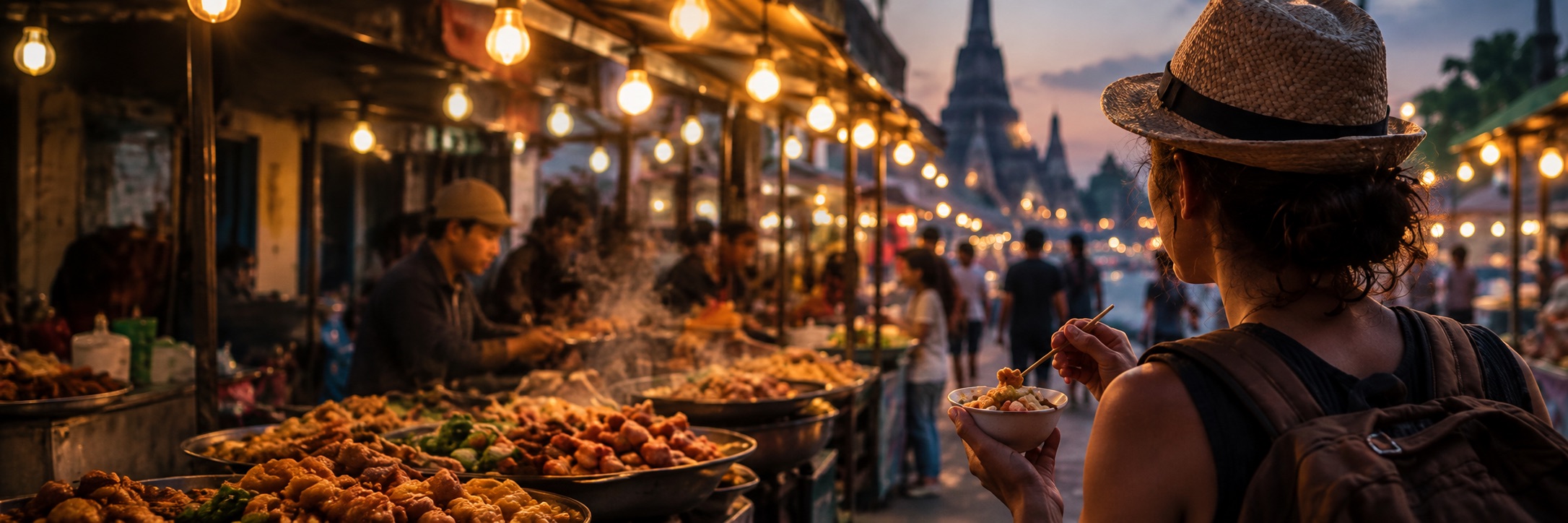
Every journey tells two stories. One belongs to the traveller, measured in destinations, photographs, memories and experiences that begin with anticipation and end with stories shared long after the journey is over. The other unfolds quietly in the background and belongs to the countless people whose livelihoods begin the moment a traveller arrives, from the tea vendor outside a railway station to the family serving breakfast in a narrow street. We rarely notice this invisible economy, yet it has always been there.
Travel is often associated with airlines, hotels, attractions, beaches, historic landmarks and world-famous destinations. Governments celebrate tourist arrivals, economists measure visitor spending, and businesses invest in airports, highways, resorts and hospitality infrastructure. These are the visible engines of tourism. Hidden beneath them is another economy that quietly accompanies almost every traveller, yet rarely receives the same attention.
It begins with food. The moment people arrive in an unfamiliar place, they instinctively look for something to eat or drink: a hot cup of tea after a long train ride, fresh fruit from a roadside cart, a bowl of noodles prepared before their eyes, a local delicacy recommended by a taxi driver, or a family run café tucked away in a quiet lane. Food is rarely just another stop on the itinerary; it often becomes the first genuine conversation between a traveller and the place they have come to explore.
Over the years, food itself has become a reason to travel. Visitors travel to Bangkok as much for its vibrant street markets as its temples. In India, countless railway platforms are remembered not for the trains that passed through them, but for the chai, vadas, cutlets, biryanis and regional delicacies served with remarkable consistency over decades. Across the world, travellers increasingly seek flavours that cannot be recreated anywhere else, choosing destinations not only for what they can see, but also for what they can taste. People no longer eat simply because they are travelling; very often, they travel because they want to eat.
Yet the meals that leave the deepest memories are not always served inside luxury hotels or celebrated restaurants. More often, they are found where local life naturally unfolds: a crowded evening market, a modest roadside stall, a food cart outside a bus station, a tiny bakery opening before sunrise, or a grandmother preparing the same recipe she has served for decades. These places may appear ordinary, but together they form an extraordinary economic ecosystem.
Unlike large restaurant chains, these businesses rarely have sophisticated technology, elaborate marketing campaigns or complex supply networks. Their strength lies elsewhere: they are rooted in their communities, purchase local ingredients, preserve regional recipes, employ neighbourhood workers and welcome visitors with a warmth that cannot be manufactured. For many families, these businesses are far more than a source of income. They represent independence, dignity and the opportunity to build a livelihood through honest work, keeping traditional recipes alive, creating employment where opportunities may be limited, and giving neighbourhoods an identity that visitors remember long after returning home.
The informal food economy has always lived between admiration and caution. Ask people about street food and many will immediately mention hygiene or cleanliness, yet those very same people often find themselves standing patiently beside a busy food cart, waiting for the dish that local residents insist is the best in town. There is a quiet contradiction in that behaviour: experience often outweighs perception. A crowded stall usually tells its own story, reflecting trust earned over many years, recipes refined through practice, and customers who return not because of advertising, but because of quality and consistency. Travellers instinctively follow local crowds, believing that the best recommendations are rarely found in guidebooks.
Food safety remains important, and every traveller deserves confidence in what they eat. Equally, the millions of vendors who form this hidden economy deserve encouragement, better infrastructure, improved facilities, access to education and opportunities to raise standards while preserving the authenticity that makes them unique. Supporting livelihoods and promoting higher standards can move together; one does not have to come at the expense of the other.
Perhaps that is where the true strength of this hidden economy lies. It thrives not because it is organised by multinational corporations or driven by billion dollar investments, but because it is sustained by everyday human connections: a smile exchanged across a food counter, a recommendation from a local resident, a traveller discovering a flavour they had never imagined before. These small moments, collectively, become one of the largest economic networks surrounding travel.
Every meal purchased from a local vendor creates a ripple that extends far beyond the plate. It supports farmers, fishermen, transport workers, market suppliers, family businesses, neighbourhood communities and generations of culinary traditions, preserving local identity in ways that no tourism campaign, advertising slogan or destination brochure can ever fully achieve. Perhaps that is why these experiences remain with us long after the journey ends.
We may forget the hotel room number, the airport gate or the flight number, but we rarely forget the tiny café where breakfast became a conversation, the roadside vendor whose hospitality exceeded expectations, or the evening market where strangers became friends over a shared meal. The next time you stop for a cup of tea at a roadside stall, share lunch in a family run café, or discover a small food cart tucked away in a crowded street, pause for a moment. You are not simply buying a meal; you are becoming part of a much larger story, one that rarely appears in tourism reports or economic statistics, yet quietly sustains millions of lives every single day.
Behind every journey, there is another journey, one measured not in miles travelled, but in meals served, families supported, traditions preserved and dreams quietly sustained. Perhaps the hidden economy is not hidden because it is small.
Perhaps it is hidden because we have never stopped to look for it.